
Staying Active When You Sit at a Desk All Day
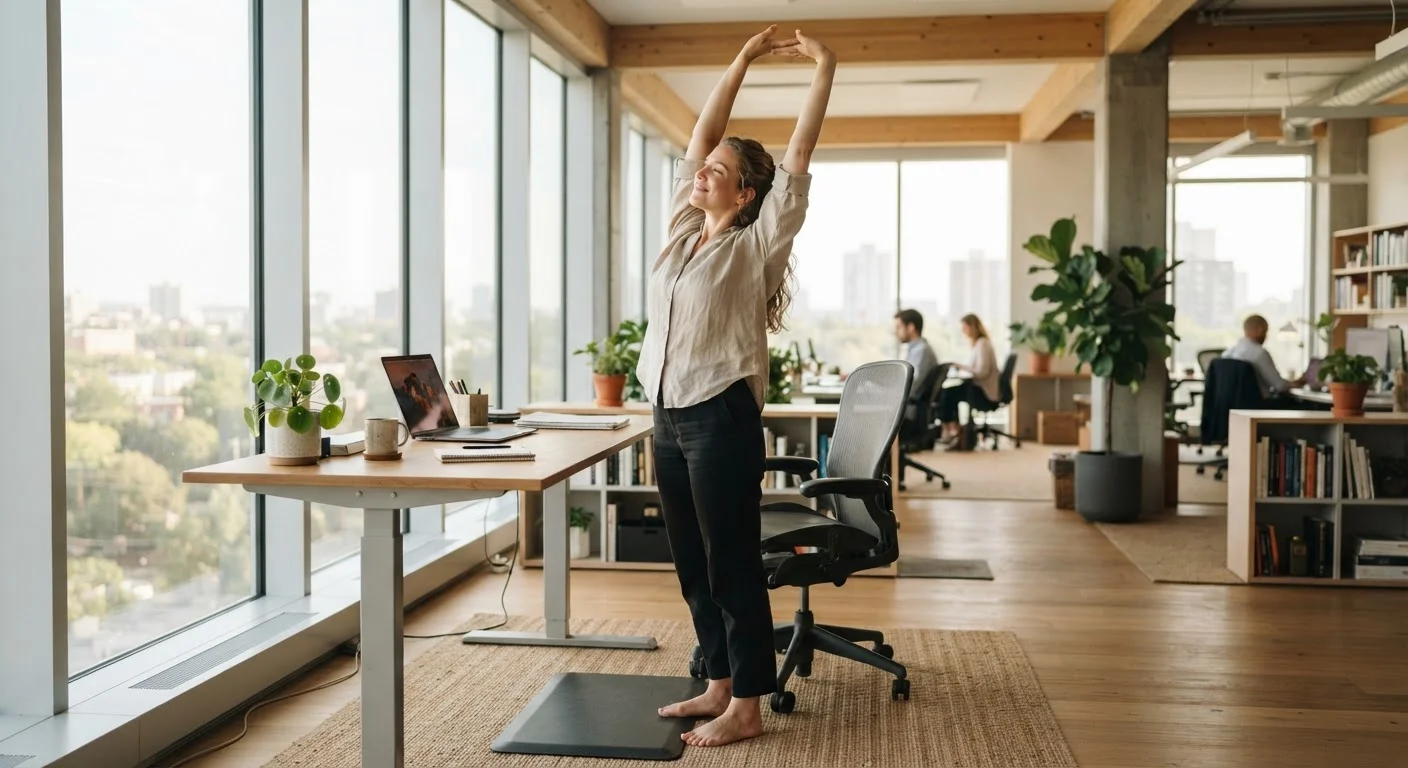
Photo credit: TrendingExperts.net
In this article
A sedentary workday doesn't have to undo your fitness goals. Practical, low-barrier strategies for adding movement to a desk-based routine.
Key Takeaways
- Prolonged sitting is linked to reduced circulation, muscle stiffness, and lower energy levels.
- Breaking sedentary time with short movement bursts is more effective than a single end-of-day workout.
- Most desk-friendly movement strategies require no equipment and minimal time.
- Habit triggers - like calendar reminders or coffee breaks - make movement automatic over time.
- Consistency with small efforts matters more than intensity for desk workers.
Why Sitting All Day Is a Distinct Health Challenge
Most people who sit at a desk for eight or more hours aren't sedentary by choice - they're simply doing their jobs. But prolonged sitting creates a specific set of physical effects that a single gym session often can't fully offset. Circulation slows, postural muscles disengage, and the hip flexors - responsible for much of your lower back comfort - spend hours in a shortened position.
Public health guidance from organizations including the World Health Organization emphasizes reducing unbroken sedentary time as a distinct goal from meeting weekly exercise targets. In other words, an hour at the gym after eight hours of sitting is valuable, but it doesn't erase the physiological effects of those eight hours. The good news: the fix is low-effort, low-cost, and fits inside a normal workday.
For a broader look at how movement fits into your overall health picture, the Fitness & Exercise hub covers accessible explanations of different activity types and their benefits.
This Is General Information, Not Medical Advice
The strategies in this article are intended for generally healthy adults looking to reduce sedentary time. If you have a musculoskeletal condition, cardiovascular concern, or any health issue that affects your ability to exercise, consult a qualified healthcare professional before changing your activity levels.
What You'll Need Before You Start
One of the advantages of desk-based movement strategies is minimal setup. Review what's useful below before working through the steps.
What you will need
Timer or reminder app
Prompts you to move at regular intervals throughout the workday.
Resistance band
Enables seated leg and arm exercises that add gentle resistance without taking up desk space.
Standing desk or desk riser
Allows you to alternate between sitting and standing during the day.
How to Add Movement to Your Workday
Follow the steps below in order. Each one builds on the last, but you can start with whichever fits your current work setup most easily.
Set a movement reminder every 45-60 minutes
Use your phone's timer, a calendar alert, or a free app to prompt yourself to move at least once per hour. Research on sedentary behavior consistently identifies prolonged, unbroken sitting as the main concern - not total daily sitting time alone. Even a two-minute break changes your body's metabolic response.
Stand up and move for 2-5 minutes each break
When your reminder goes off, stand, walk to get water, do a brief hallway loop, or simply stand in place and shift your weight. The goal is to interrupt the sustained seated position - distance and speed are not the point at this stage.
Add desk-friendly stretches for your neck, hips, and wrists
These areas accumulate tension fastest during desk work. Try gentle neck rolls (ear toward shoulder, hold 10 seconds each side), seated hip flexor stretches (shift to the edge of your chair and extend one leg back), and wrist circles. Hold stretches at the point of mild tension - never force a stretch into pain.
Take at least one walking meeting or phone call per day
Identify a meeting or phone call that doesn't require you to be at your screen and take it on foot - even a short indoor loop counts. Walking during low-visual-demand calls increases daily step count without carving out separate exercise time.
Build a short end-of-day movement routine (10-15 minutes)
Close the workday with a brief routine targeting what sitting compresses most: hip flexors, hamstrings, upper back, and shoulders. Bodyweight exercises - glute bridges, standing lunges, wall angels - require no equipment and take under 15 minutes. This signals a transition out of work mode as well as a physical reset.
Track your movement habit - not your workout performance
For desk workers, consistency with interrupting sedentary time is the primary measure of success. A simple tally of how many movement breaks you took is more useful at this stage than tracking calories or step counts. Once the habit is solid, you can layer in structured workouts. See our resource on building a weekly exercise routine that actually sticks for that next step.
Stack Movement Onto Existing Habits
Link movement to something you already do - stand up every time you pour a coffee, do calf raises while waiting for a document to print, or take calls on a short walk. Habit stacking makes new behaviors stick without willpower alone.
Making It Stick Over the Long Term
The most common reason desk workers abandon movement habits isn't motivation - it's that the habits weren't designed to survive a busy day. The strategies above are intentionally low-barrier: no gym, no gear, no blocked-off fitness hour required.
If your goal is to build these micro-movements into a fuller fitness picture, our comprehensive guide to building a sustainable fitness routine covers goal-setting, workout structure, and long-term consistency. And if mobility considerations affect what movements are available to you, seated and low-impact exercise options offers tailored alternatives.
Don't Push Through Pain
Desk stretches and micro-movements should feel comfortable - mild tension is normal, but sharp or persistent pain is not. Stop any movement that causes discomfort and speak with a healthcare provider if pain continues.
This article is for general informational and educational purposes only and is not a substitute for professional medical advice. Consult a qualified healthcare provider before beginning any new physical activity program, particularly if you have existing health conditions.

Author
Beauty Editorial Team
Beauty Editorial Team is the collective byline for our editorial team and contributor network. Articles published under this byline or an editorial pen name are researched, written, and reviewed according to our editorial standards for clarity, consistency, and independence before publication.
View all articles →